Find Your Voice
3 Rules for Public Speaking: What you didn't know
Andrei Schiller-Chan · · 10 min read
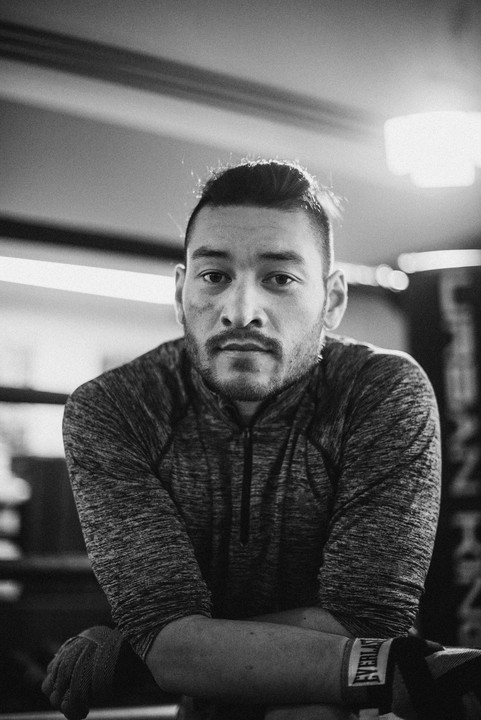
The movement of the body, the feeling of feet-to-earth contact, reinvigorates the primordial essence of humanity and ignites the beginning of the chain that Kristin Linklater calls the ‘Natural Voice’ (Linklater, 2006). As a Director, I have noted and educated among my company, that when the body and breath are working in unison, underscored by a strong “intention” of learning and dedication, the soul speaks of itself – those rare times of surprise at unplanned inspiration. This is what is known as effort without effort, or the zone, the place where time slows down for performers, and the natural voice reigns as the heralding cry of Return to Nature’s intelligence. The sound literally bursts from the player’s heart without conscious recognition, no mind, a purity of ease - a life of its own – alikeness to the incandescent syllable “Om” that affirms to creation in and of itself. The players are sometimes completely unconscious of this arresting sound and become merely, but greatly, the vessel for sound to exist. The excitement in watching this happen before our eyes is what every director hopes to experience, and for what every performer yearns. For this to happen, therein lies the necessity of unifying the body with movement and breath, awareness of one’s own emotional restrictions that harbour within the sagittal and coronal plane of the body, how the voice is affected by conditional habits, and the importance of phonetic technique. The following will provide a brief analysis of the variables that must work together for objective, rather than subjective, performance on stage.
1. Let the Feet tell the Story: The effects of movement, posture, and grounding on voice for performers.
Grounding is a key principle in the effective use of voice for performers that I tend to focus on rigorously. Tadashi Suzuki illustrated:
The feet alone can stamp and strike the earth, which represents man’s power and authority. The feet, have provided, up until now, the ultimate means of communication between man and earth
Suzuki, 2015, p. 73
At the expense of efficient roads, we developed shoes, and lost contact with the grass. Our feet have become lazy and research shows that runners around the world will experience some form of chronic injury due to weak arches. The feet affect the biomechanics of posture, which in turn affects the voice. By becoming more attuned to our feet on the ground we discover a means of self-awareness and heightened sensitivity. By feeling the right to stand upon the earth it gives an actor “a sense of his own strength inherent in his body…and can lead the actor’s body to achieve a transformation from the personal to the universal’ (Suzuki, 2015, p. 71). In hearing Suzuki’s attention to the “right to stand”, one can’t help but recognise the resemblance to Patsy Rodenburg’s treatise on the ‘Right to Speak’ (Rodenburg, 1992). In my experience, they are linked and one cannot live without the other, ‘no one part can compensate with its strength for the weakness of another’ (Linklater, 2006, p. 9). In rehearsals for my company, we spend the first few weeks using games that involve balance, running, jumping, elements of boxing and training the archetypal fighters stance. This allows the performers pelvic floor to drop, to maintain that sense of readiness and vibration that is necessary for the ebbing of tension until the plays end. When watching an actor’s feet, I can immediately tell whether she is mentally or emotionally committed to the text. A flighty touch on the stage reveals a lack of ownership and a constricted diaphragm. The breath is essentially trapped, lifting the body off the ground like a balloon. If the body isn’t weighted in the feet then ownership of the text is affected, and truth found in the text is supplanted by mediocrity. Much like Suzuki, it all begins with the feet. Feet squarely under the hips, unlock the knees so the weight can be centered around the pelvis. Allow the diaphragm to move down lower so one can feel the lower back expanding, feel that the words exist on the breath. These are the basic laws my company trained by daily. Only when we achieve a neutral spine, do we begin activating the resonators, tongue, soft-hard palate, and extending into phonetics and range.
2. On Posture: How Balance within affects Resonance
Euclid stated that, ‘Things which are equal to the same thing are also equal to one another’ (Euclid, 2013, p. 222). Great Performers understand that the body works as a chain of progression, ‘You cannot release the natural voice until you’ve singled out that one flaw, the personal physical trap that triggered the chain reaction’ (Rodenburg, 1992, p. 21). If one muscle is under-utilised, then another will compensate to maintain the equality, even if it is at the expense of integrity. A constricted stomach means the breath cannot travel into the depths of the individual, too much tension in the shoulders lock the ribs from swinging outwardly, and if rounded, causing the neck to compensate by pushing forward, tightening the vocal tract. As the Director, I have had to learn how to keep the vocal apparatus working efficiently whilst also being aware of how the biomechanics of the actor affect their voice, and how to work around it if the situation demands. Antony Sher’s characterisation of Richard III is a prime example of someone working with a voice coach to maintain his vocal integrity whilst exhibiting some of the most demanding postural characterisations. And there’s the crutch, no great character has a perfect posture, or the perfect voice. It is up to the actor to use what he or she has at their command to adopt the mannerisms and vocal traits of their character at the expense of their own personal integrity; so that they may achieve what Suzuki called universal transformation (Suzuki, 2015, p. 71). Those with trained understanding of voice are aware of what effects these transformations will have on their body and voice, and how they can adapt to it. The result of poor performances is the tendency for generalisation, and so in the adoption of postural characterisation, which will affect the voice, every movement must be specific and accounted for in releasing the natural voice. With this attention to technique and specific cognitive understanding the actor can learn to trust his new-found mold. It is only through this trust that his breath can drop and give weight to the words he is about to express. The specificity is a crucial link in allowing the words to have a life of their own; Jung put this technical specificity thusly:
He has penetrated to that matrix of life in which all men are embedded, which imparts a common rhythm to all human existence, and allows the individual to communicate his feeling and his striving to mankind as a whole
Jung, 1933, p. 172
I have been very fortunate to have been witness, coach and director to a few of these rare moments where the actor transcends the stage through the utterance of sound.
3. On Breath and Rehearsal
For my third production, my company undertook Eugene O’Neill’s, Desire Under The Elms. Our maxim chanted before we began each rehearsal was ‘Emotions exist on the breath’ (Rodenburg, 2002). Our desire was not for emotion, for then we’d be playing a result, but rather a desire for breath - for then we’re playing the present. I am a fierce director of technique. Before anything else technique comes first.¹ Eugene O’Neill demands specificity, muscularity, a supported voice to bear the weight of the grief inherent in his writing. And because that grief weighs heavy the breath must equal its partner in size - ‘the amount of breath equals length of thought and size of emotion’ (Rodenburg, 2002, p. 55). Before we moved onto any accent (1800’s New England) or articulation work, we spent many hours using techniques to expand lung capacity and realising full breath recovery (which was difficult for a few actors making the transition from film to theatre). I’d like to make clear that my knowledge of voice has come from the frontline of leading ensembles. The exercises taught to me by these great teachers, and my own acting coach, have all been tested by myself on the battlefield for over 4 years, sometimes rehearsing for days on end when working with actors one-on-one for monologue productions like “The Exonerated”. I know what works and what doesn’t, what’s useful for this scene and perhaps not for another, I know what habits hold an actor back and how to release them from its hold. I know this because I am always learning about my own voice and habits I had created from childhood.
I have yet to find a restrictive vocal habit or challenging piece of text that I haven’t been able to reincarnate for the actor due to the application of Cicely Berry’s ‘displacement strategies’ (Berry, 2008). I enjoy Cicely’s area of study in this regard, as it opens different possibilities of creating a scene as a director. There is a mutual gain both for actor and myself in allowing spontaneous creativity for voice work and it is the foundation of my style as a director. It never ceases to inspire me:
They are freed from the responsibility of speaking the text how they think it should be spoken, and making it clear; this then allows other possibilities to emerge which can both enlighten and free the imagination
Berry, 2008, p. 109
I have seen the powers of this work first hand. When the actor gives himself over to the power inherent in the word itself, the pressure to perform, to feel, relinquishes its hold upon the actors psyche and allows the collective conscious of humanity to flood within him from the capsule of sound he expresses – only if - he has his full weight behind it, supported from the breath, with energy placed at the front of his face and mouth.
In closing, the stillness that provides such electricity on stage, can only be achieved when the actor learns to unify the many “I’s” within himself, that he has learnt to open his vocal instrument through hours of articulation and resonance practice, that he can trust his breath to flow freely even at the highest and lowest of emotional peaks, that he can feel his feet and demand his right to be heard. Until the performer can understand his own body, and give every mannerism with purpose, he won’t know to what great heights his voice can summon.
¹ This mentality stems from my own training as an Amateur level Boxer and understanding that power and speed are by-products of fierce attention to the perfection of technique.
Works Cited
- Berry, C., 2008. From Word To Play: A Handbook for Directors. First ed. London: Oberon Books.
- Euclid, 2013. The Thirteen Books of Euclid's Elements. Second ed. New York: Dover Publications, Inc.
- Jung, C. G., 1933. Modern Man In Search Of A Soul. First ed. London: Houghton Mifflin Harcourt.
- Rodenburg, P., 1992. The Right To Speak: Working With The Voice. First ed. New York: Routledge, Inc.
- Rodenburg, P., 2002. The Actor Speaks: Voice and The Performer. First ed. New York: Palgrave Macmillan.
- Suzuki, T., 2015. Culture Is the Body: The Theatre Writings of Tadashi Suzuki. First ed. New York: Theatre Communications Group, Inc.